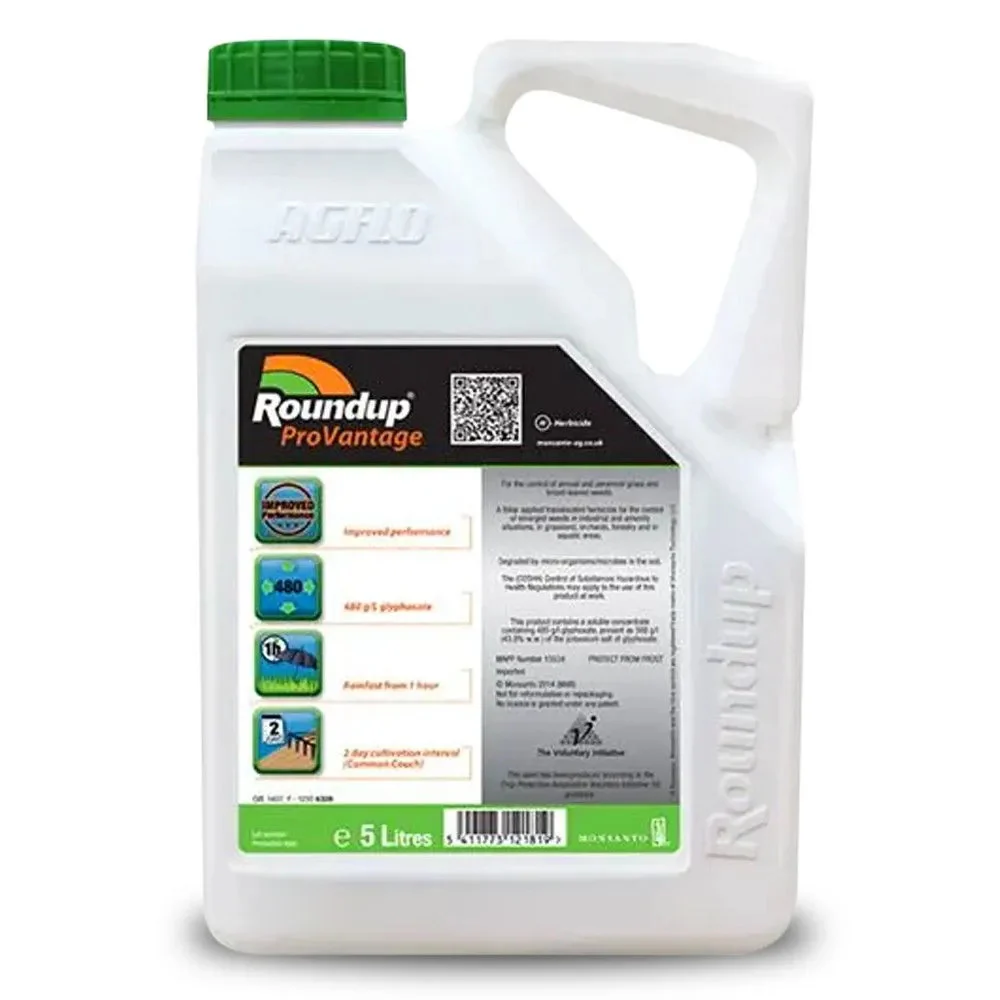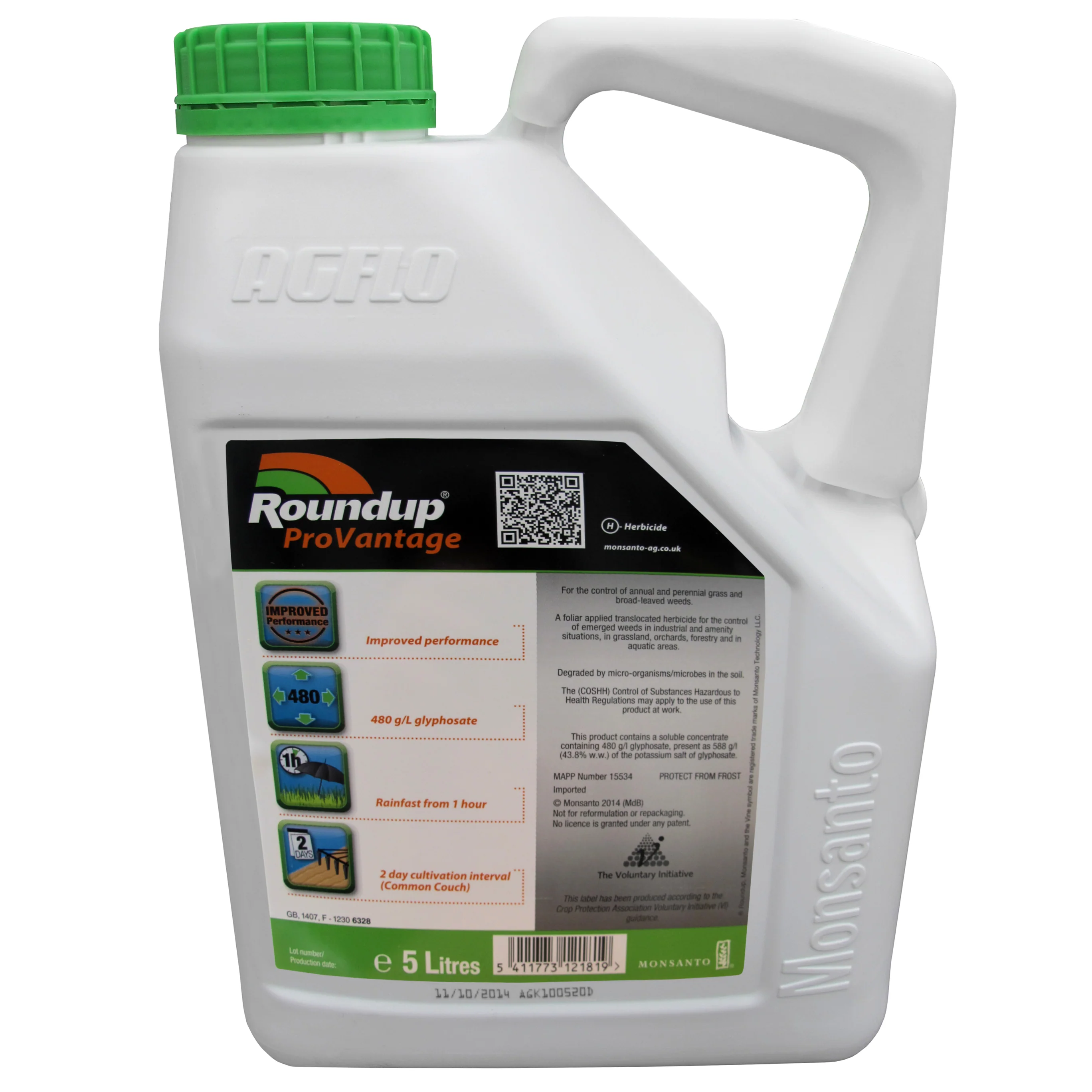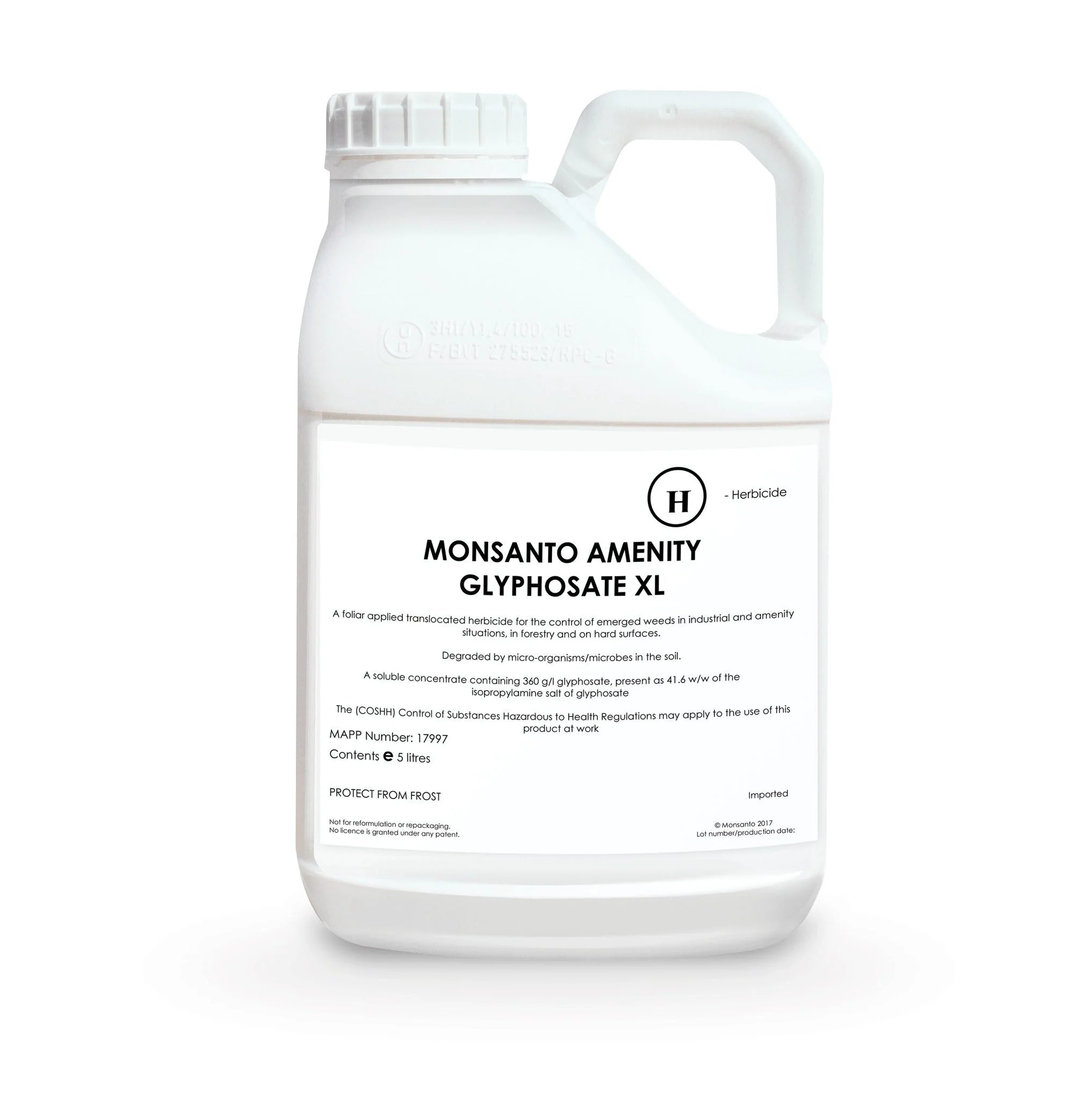
Monsanto Amenity Glyphosate XL 5L
Monsanto Amenity Glyphosate XL 5L - MAPP No. 17997
Active ingredients: 360g/L glyphosate.
| Product Overview | |
|---|---|
| Product Type | Herbicide |
| Product Name | Monsanto Amenity Glyphosate XL |
| MAPP No. | 17997 |
| Active Substances | Glyphosate |
| Formulation | Soluble concentrate |
| Areas of Use | Amenity vegetation, forest, forest nursery, hard surfaces, natural surfaces not intended to bear vegetation, permeable surfaces overlying soil |
| Amateur/Professional | Professional |
| Application Window | |||||||||||
|---|---|---|---|---|---|---|---|---|---|---|---|
| Jan | Feb | Mar | Apr | May | Jun | Jul | Aug | Sep | Oct | Nov | Dec |
| Weeds Controlled |
|---|
| Wide range of annual and perennial broad-leaved and grass weeds |
Monsanto Amenity Glyphosate XL is a foliar applied systemic penetrant total herbicide. Glyphosate moves systemically within treated plants to give effective control not just of top growth but also roots of unwanted vegetation.
The effectiveness of Monsanto Amenity Glyphosate XL is improved by the inclusion of a surfactant in the formulation. This increases the penetration of the active substance into plant cells leading to better control of treated plants.
The product can be used with a variety of applicators, including weed wipers and controlled droplet applicators as well as conventional spraying equipment.
This 5L bottle is sufficient to treat up to 3.3ha.
Target Species
Monsanto Amenity Glyphosate XL gives post-emergence control of a wide range of annual and perennial broad-leaved and grass weeds.
Instructions for use
Where to use
For use on
- Amenity vegetation - Any areas of semi natural or ornamental vegetation, including trees (see product label for susceptible non-target plants)
- Forest - Groups of trees being grown in their final positions
- Forest nursery - Areas where trees are raised outside for subsequent forest re-planting.
- Hard surfaces - Any man-made impermeable surface, such as concrete or asphalt and including railway ballast.
- Natural surfaces not intended to bear vegetation - Areas of soil or natural outcroppings of rock that are not intended to bear vegetation
- Permeable surfaces overlying soil - Any man-made permeable surface (excluding railway ballast), such as gravel, that overlies soil and is not intended to bear vegetation.
When to use
Apply once grasses and broadleaved weeds have emerged and are actively growing (normally March to October). Perennial broad-leaved weeds are generally most susceptible when at or near flowering stage. Perennial grasses must have produced fresh leaves which are green and vigorous. A period without rain of at least six hours and preferably 24 hours must follow application.
How to use
Recommended application rates, water volume and application equipment varies depending on the area of use and type of weed being targeted. Please refer to the product label for full details for your situation. The table below gives a general guide:
| Weed Type | Pack Coverage | Application Rate | Water Volume |
|---|---|---|---|
| Annual weeds | 3.3ha | 1.5l/ha | 800 - 400L/ha (40l/ha for rotary atomisers) |
| Perennial grasses and broadleaved weeds | 1-1.25ha | 4-5l/ha |
- For tractor mounted and powered sprayers or handheld spray equipment, apply at a rate of 1.5-5l/ha in 80-400l/ha water using a medium or coarse spray quality nozzle. Use gentle agitation when filling to distribute the herbicide evenly through the sprayer and add a defoamer if required.
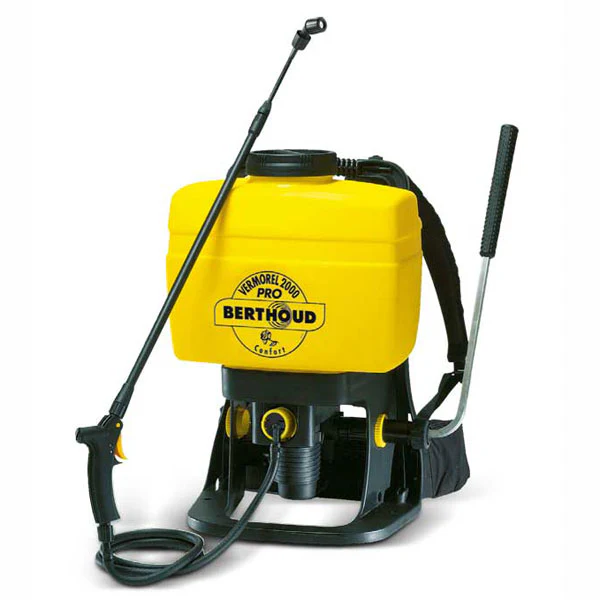
- For knapsack sprayers, apply at a rate of 1.5-5l/ha in 80-400l/ha water.
- For conventional rotary atomisers use a minimum spray volume of 40l/ha and ensure that the droplet diameter falls within the range 200-300 microns.
- For ropewick applicator weed wipers, use 1 part Monsanto Amenity Glyphosate XL to 2 parts water, adding a water-soluble dye if required.
- For new generation weed wipers, use 1 part Monsanto Amenity Glyphosate XL to 10-20 parts water.
Application Information
- Avoid contact with non-target plants
- A period of at least 6 hours and preferably 24 hours rain-free must follow application.
- Do not spray onto weeds which are naturally senescent or where growth is impaired by drought, high temperatures, dust, flooding or frost.
- Do not spray in windy conditions.
- After application cultivate before crop drilling if large concentrations of decaying plant matter is present.
Active Substances
Glyphosate
Bio-Chemical Mode of Action: Glyphosate belongs to the Inhibition of Enolpyruvyl Shikimate Phosphate Synthase (ESPS) group of herbicides.
ESPS herbicides work by shutting down the shikimate pathway which is used in the production of the proteins it needs to grow and survive.
Mobility: Glyphosate is a systemic penetrant which means that the active substance can be translocated downwards through the plant within the phloem (sugar conducting tissues) and upwards through the plant within the xylem (water conducting tissues).
Application timing: ESPS herbicides are best applied when the weeds are actively growing. They are generally more effective when target plants are younger and in their vegetative phases.
Resistance: As of 2018, 38 weed species distributed across 37 countries and in 34 different crop and 6 non-crop situations had been identified.
Monsanto Amenity Glyphosate XL 5L - MAPP No. 17997
Active ingredients: 360g/L glyphosate.
| Product Overview | |
|---|---|
| Product Type | Herbicide |
| Product Name | Monsanto Amenity Glyphosate XL |
| MAPP No. | 17997 |
| Active Substances | Glyphosate |
| Formulation | Soluble concentrate |
| Areas of Use | Amenity vegetation, forest, forest nursery, hard surfaces, natural surfaces not intended to bear vegetation, permeable surfaces overlying soil |
| Amateur/Professional | Professional |
| Application Window | |||||||||||
|---|---|---|---|---|---|---|---|---|---|---|---|
| Jan | Feb | Mar | Apr | May | Jun | Jul | Aug | Sep | Oct | Nov | Dec |
| Weeds Controlled |
|---|
| Wide range of annual and perennial broad-leaved and grass weeds |
Monsanto Amenity Glyphosate XL is a foliar applied systemic penetrant total herbicide. Glyphosate moves systemically within treated plants to give effective control not just of top growth but also roots of unwanted vegetation.
The effectiveness of Monsanto Amenity Glyphosate XL is improved by the inclusion of a surfactant in the formulation. This increases the penetration of the active substance into plant cells leading to better control of treated plants.
The product can be used with a variety of applicators, including weed wipers and controlled droplet applicators as well as conventional spraying equipment.
This 5L bottle is sufficient to treat up to 3.3ha.
Target Species
Monsanto Amenity Glyphosate XL gives post-emergence control of a wide range of annual and perennial broad-leaved and grass weeds.
Instructions for use
Where to use
For use on
- Amenity vegetation - Any areas of semi natural or ornamental vegetation, including trees (see product label for susceptible non-target plants)
- Forest - Groups of trees being grown in their final positions
- Forest nursery - Areas where trees are raised outside for subsequent forest re-planting.
- Hard surfaces - Any man-made impermeable surface, such as concrete or asphalt and including railway ballast.
- Natural surfaces not intended to bear vegetation - Areas of soil or natural outcroppings of rock that are not intended to bear vegetation
- Permeable surfaces overlying soil - Any man-made permeable surface (excluding railway ballast), such as gravel, that overlies soil and is not intended to bear vegetation.
When to use
Apply once grasses and broadleaved weeds have emerged and are actively growing (normally March to October). Perennial broad-leaved weeds are generally most susceptible when at or near flowering stage. Perennial grasses must have produced fresh leaves which are green and vigorous. A period without rain of at least six hours and preferably 24 hours must follow application.
How to use
Recommended application rates, water volume and application equipment varies depending on the area of use and type of weed being targeted. Please refer to the product label for full details for your situation. The table below gives a general guide:
| Weed Type | Pack Coverage | Application Rate | Water Volume |
|---|---|---|---|
| Annual weeds | 3.3ha | 1.5l/ha | 800 - 400L/ha (40l/ha for rotary atomisers) |
| Perennial grasses and broadleaved weeds | 1-1.25ha | 4-5l/ha |
- For tractor mounted and powered sprayers or handheld spray equipment, apply at a rate of 1.5-5l/ha in 80-400l/ha water using a medium or coarse spray quality nozzle. Use gentle agitation when filling to distribute the herbicide evenly through the sprayer and add a defoamer if required.
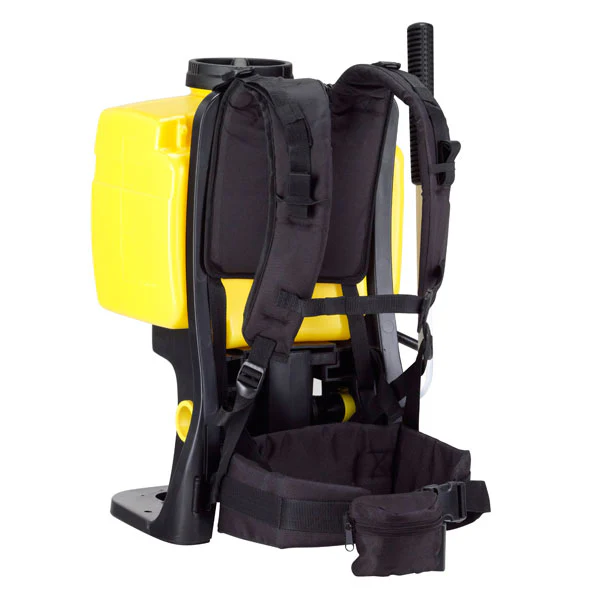
- For knapsack sprayers, apply at a rate of 1.5-5l/ha in 80-400l/ha water.
- For conventional rotary atomisers use a minimum spray volume of 40l/ha and ensure that the droplet diameter falls within the range 200-300 microns.
- For ropewick applicator weed wipers, use 1 part Monsanto Amenity Glyphosate XL to 2 parts water, adding a water-soluble dye if required.
- For new generation weed wipers, use 1 part Monsanto Amenity Glyphosate XL to 10-20 parts water.
Application Information
- Avoid contact with non-target plants
- A period of at least 6 hours and preferably 24 hours rain-free must follow application.
- Do not spray onto weeds which are naturally senescent or where growth is impaired by drought, high temperatures, dust, flooding or frost.
- Do not spray in windy conditions.
- After application cultivate before crop drilling if large concentrations of decaying plant matter is present.
Active Substances
Glyphosate
Bio-Chemical Mode of Action: Glyphosate belongs to the Inhibition of Enolpyruvyl Shikimate Phosphate Synthase (ESPS) group of herbicides.
ESPS herbicides work by shutting down the shikimate pathway which is used in the production of the proteins it needs to grow and survive.
Mobility: Glyphosate is a systemic penetrant which means that the active substance can be translocated downwards through the plant within the phloem (sugar conducting tissues) and upwards through the plant within the xylem (water conducting tissues).
Application timing: ESPS herbicides are best applied when the weeds are actively growing. They are generally more effective when target plants are younger and in their vegetative phases.
Resistance: As of 2018, 38 weed species distributed across 37 countries and in 34 different crop and 6 non-crop situations had been identified.
Description
Monsanto Amenity Glyphosate XL 5L - MAPP No. 17997
Active ingredients: 360g/L glyphosate.
| Product Overview | |
|---|---|
| Product Type | Herbicide |
| Product Name | Monsanto Amenity Glyphosate XL |
| MAPP No. | 17997 |
| Active Substances | Glyphosate |
| Formulation | Soluble concentrate |
| Areas of Use | Amenity vegetation, forest, forest nursery, hard surfaces, natural surfaces not intended to bear vegetation, permeable surfaces overlying soil |
| Amateur/Professional | Professional |
| Application Window | |||||||||||
|---|---|---|---|---|---|---|---|---|---|---|---|
| Jan | Feb | Mar | Apr | May | Jun | Jul | Aug | Sep | Oct | Nov | Dec |
| Weeds Controlled |
|---|
| Wide range of annual and perennial broad-leaved and grass weeds |
Monsanto Amenity Glyphosate XL is a foliar applied systemic penetrant total herbicide. Glyphosate moves systemically within treated plants to give effective control not just of top growth but also roots of unwanted vegetation.
The effectiveness of Monsanto Amenity Glyphosate XL is improved by the inclusion of a surfactant in the formulation. This increases the penetration of the active substance into plant cells leading to better control of treated plants.
The product can be used with a variety of applicators, including weed wipers and controlled droplet applicators as well as conventional spraying equipment.
This 5L bottle is sufficient to treat up to 3.3ha.
Target Species
Monsanto Amenity Glyphosate XL gives post-emergence control of a wide range of annual and perennial broad-leaved and grass weeds.
Instructions for use
Where to use
For use on
- Amenity vegetation - Any areas of semi natural or ornamental vegetation, including trees (see product label for susceptible non-target plants)
- Forest - Groups of trees being grown in their final positions
- Forest nursery - Areas where trees are raised outside for subsequent forest re-planting.
- Hard surfaces - Any man-made impermeable surface, such as concrete or asphalt and including railway ballast.
- Natural surfaces not intended to bear vegetation - Areas of soil or natural outcroppings of rock that are not intended to bear vegetation
- Permeable surfaces overlying soil - Any man-made permeable surface (excluding railway ballast), such as gravel, that overlies soil and is not intended to bear vegetation.
When to use
Apply once grasses and broadleaved weeds have emerged and are actively growing (normally March to October). Perennial broad-leaved weeds are generally most susceptible when at or near flowering stage. Perennial grasses must have produced fresh leaves which are green and vigorous. A period without rain of at least six hours and preferably 24 hours must follow application.
How to use
Recommended application rates, water volume and application equipment varies depending on the area of use and type of weed being targeted. Please refer to the product label for full details for your situation. The table below gives a general guide:
| Weed Type | Pack Coverage | Application Rate | Water Volume |
|---|---|---|---|
| Annual weeds | 3.3ha | 1.5l/ha | 800 - 400L/ha (40l/ha for rotary atomisers) |
| Perennial grasses and broadleaved weeds | 1-1.25ha | 4-5l/ha |
- For tractor mounted and powered sprayers or handheld spray equipment, apply at a rate of 1.5-5l/ha in 80-400l/ha water using a medium or coarse spray quality nozzle. Use gentle agitation when filling to distribute the herbicide evenly through the sprayer and add a defoamer if required.
- For knapsack sprayers, apply at a rate of 1.5-5l/ha in 80-400l/ha water.
- For conventional rotary atomisers use a minimum spray volume of 40l/ha and ensure that the droplet diameter falls within the range 200-300 microns.
- For ropewick applicator weed wipers, use 1 part Monsanto Amenity Glyphosate XL to 2 parts water, adding a water-soluble dye if required.
- For new generation weed wipers, use 1 part Monsanto Amenity Glyphosate XL to 10-20 parts water.
Application Information
- Avoid contact with non-target plants
- A period of at least 6 hours and preferably 24 hours rain-free must follow application.
- Do not spray onto weeds which are naturally senescent or where growth is impaired by drought, high temperatures, dust, flooding or frost.
- Do not spray in windy conditions.
- After application cultivate before crop drilling if large concentrations of decaying plant matter is present.
Active Substances
Glyphosate
Bio-Chemical Mode of Action: Glyphosate belongs to the Inhibition of Enolpyruvyl Shikimate Phosphate Synthase (ESPS) group of herbicides.
ESPS herbicides work by shutting down the shikimate pathway which is used in the production of the proteins it needs to grow and survive.
Mobility: Glyphosate is a systemic penetrant which means that the active substance can be translocated downwards through the plant within the phloem (sugar conducting tissues) and upwards through the plant within the xylem (water conducting tissues).
Application timing: ESPS herbicides are best applied when the weeds are actively growing. They are generally more effective when target plants are younger and in their vegetative phases.
Resistance: As of 2018, 38 weed species distributed across 37 countries and in 34 different crop and 6 non-crop situations had been identified.